

Repeated barking can make an ordinary afternoon stressful for a dog and everyone sharing the home. Hush Bark SmartBark Collar is sold as a rechargeable, automatic collar with adjustable bark sensing, vibration, and static correction. Its simple controls and washable-looking strap make the concept easy to understand, but the buying decision deserves more care than the checkout’s quick promise suggests. This research-based Hush Bark collar review examines the seller’s manual, fit guidance, animal-welfare considerations, and written return policy. We have not purchased or tested the collar on a dog.
Our view: The collar has appealing practical features: a clear digital display, USB charging, adjustable sensitivity, and a strap intended for different dog sizes. Its static-shock function is a significant limitation. Veterinary behavior experts recommend reward-based training and advise against aversive electronic collars. If barking is rooted in fear, separation distress, pain, or a medical problem, address that cause with a veterinarian or qualified reward-based professional before considering a device. The seller’s own exclusions and return costs also need attention.
What Hush Bark actually sells
The seller checkout calls this the Hush Bark SmartBark Collar. Its owner’s manual shows a dark patterned strap, small digital control face, USB charging cable, two lengths of silicone-covered contact probes, and a test light in the package. The manual describes a sound sensor that reacts to barking and triggers sound, vibration, or static output according to the selected settings. That is more specific than the word “smart” in the marketing headline. It is an automatic bark-response collar, not a device that diagnoses why a dog barks.
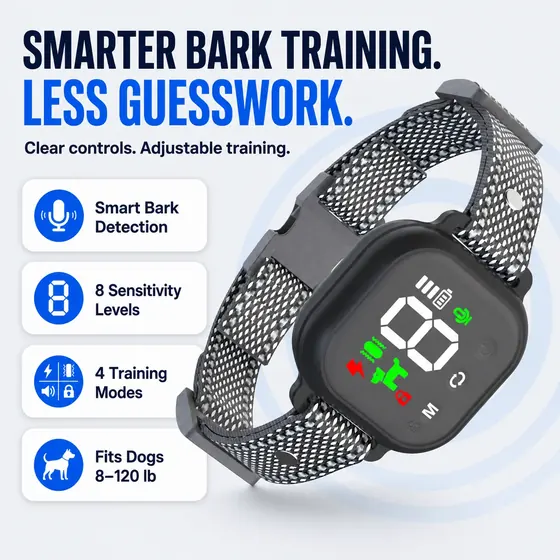
The seller’s feature graphic advertises eight sensitivity levels and four training modes. The manual provides separate instructions for the bark sensor, vibration and shock levels; it also says the unit can enter a protective pause after several consecutive triggers. These are seller descriptions, and we did not independently measure detection accuracy, intensity, battery life, or false-trigger frequency. A dog vocalizing for a good reason can still trigger an automatic device. Treat the displayed number as a setting, not a measure of training progress.
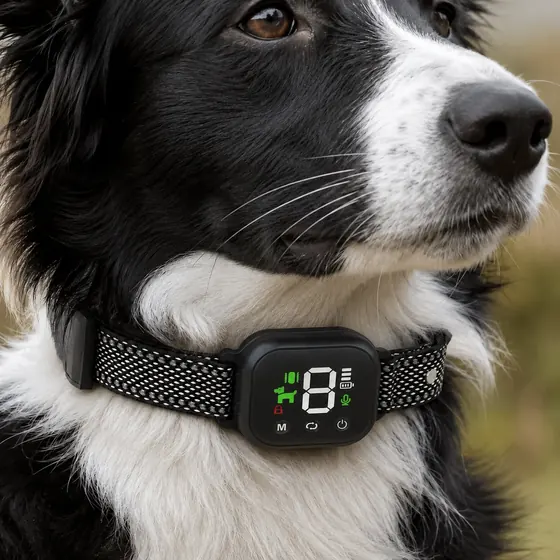
Why the control layout is attractive
The physical design is probably the clearest strength in this offer. A visible battery indicator and separate controls are easier to understand than an unmarked collar with an obscure sequence of presses. The seller says to hold the power button for two seconds to turn the device on or off, then unlock the controls before changing settings. USB charging also avoids buying disposable batteries. The FAQ says a charge can last several weeks in normal use, but that is a seller estimate and would depend on how often the unit activates.
Hush Bark is advertised for dogs of at least eight pounds and over three months of age. That broad range does not make every eligible dog a suitable candidate. The seller explicitly advises against use for elderly, pregnant, aggressive, easily frightened, or unwell dogs. It also recommends regular breaks and checking the skin under the collar. Those exclusions matter more than the graphic’s broad “fits dogs” label. An owner should check neck size, strap adjustment, contact-probe fit, and the dog’s response rather than relying on weight alone.
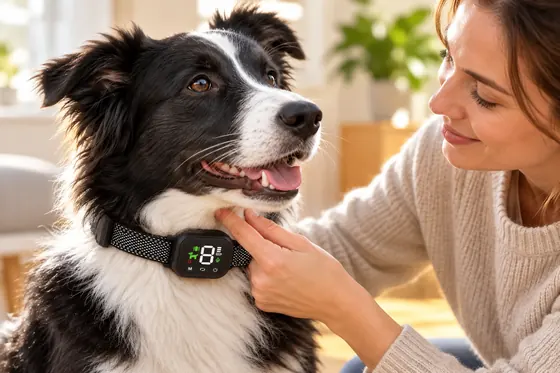
The manual explains that the contact points should touch the skin without tightening the strap excessively. It says to use the silicone covers and avoid prolonged wear in one position. A comfortable fit is essential even if an owner chooses only sound or vibration settings. If a dog scratches at the device, freezes, hides, yelps, or develops redness, stop using it and seek veterinary guidance. The product’s adjustable levels do not guarantee a comfortable experience for every dog.
Hush Bark buying checklist
| Question | What the seller says | What to decide |
|---|---|---|
| Bark response | Automatic sound, vibration and static options | Whether any aversive response fits your welfare standard |
| Dog suitability | Over three months and at least eight pounds, with exclusions | Dog’s health, temperament, neck fit and barking cause |
| Daily use | Wear breaks and skin checks; no more than 12 hours | Whether you can supervise, remove and check it |
| Order | Bundles and optional paid protection | Final total, extras, shipping and return cost |
Those questions help separate a convenient control panel from a suitable training plan. A collar can interrupt a sound without teaching a dog what to do instead. Owners who want a lasting change should identify the trigger, make the environment easier, and reinforce the behavior they want.

We may earn a commission if you buy through this link. Review the static-correction feature, dog suitability and final checkout total first.
The animal-welfare decision cannot be skipped
The seller’s FAQ calls static correction safe and says the collar detects barking before delivering vibration and shock automatically. We cannot verify a blanket safety claim. The American Veterinary Society of Animal Behavior recommends reward-based methods for dog training and advises against aversive electronic collars because of welfare risks. Its position is directly relevant to a product that includes static shock, even when the controls allow adjustment.
There are several reasons a dog may bark: a visitor, excitement, frustration, fear, pain, or distress when left alone. A bark count alone cannot tell those situations apart. The ASPCA’s barking guidance advises against punishment when barking comes from fear or anxiety unless a qualified behavior professional directs otherwise. If the behavior is new or intense, a veterinary check and a reward-based plan are a better starting point than setting a higher correction level.
If an owner still investigates this collar, the most responsible questions are whether static can be disabled, what happens after a false trigger, and how quickly the dog can be relieved of the device. The manual says to remove it for rest and inspect the skin. It also warns against use on dogs under three months, under eight pounds, pregnant, elderly, easily frightened or aggressive. Do not treat “humane” or “harmless” promotional wording as a substitute for advice about your own dog.
Price, shipping and the written return terms
The checkout shows one- through five-collar bundles and optional warranty and package-protection charges. Its package selector and example order summary show different per-collar figures, so quoting a single “current price” would mislead. Review the final quantity, shipping, tax and selected add-ons on the actual payment screen. The timer and limited-stock messages on the page are promotional claims we cannot independently confirm.
The seller’s shipping page says orders ship within 48 business hours with standard delivery of five to seven days; its FAQ says one to two business days for processing and five to ten business days for delivery. These estimates differ. The written returns policy is narrower than the simple “30-day guarantee” headline: the item must be in the same condition and original packaging, return shipping is the buyer’s responsibility, original shipping and handling are excluded, and the seller reserves the right to charge at least a 15% restocking fee. Ask support for the physical return address and confirmation of all deductions before placing an order if return flexibility matters to you.
The optional three-year protection shown at checkout is a separate paid selection. Read the seller warranty page rather than assuming the extra is included with the collar. Save a screenshot of the checkout choices and the written terms that apply to your purchase.
Final take
Hush Bark presents an easy-to-read, rechargeable collar with a clear setup path and adjustable controls. Those practical qualities may appeal to an owner who has researched the product carefully. They do not resolve the central concern: this model includes automatic static correction, and major veterinary behavior guidance favors reward-based training instead. Our recommendation is to understand the barking trigger and discuss humane options with a veterinarian or qualified reward-based trainer first. If you decide the collar is appropriate for your dog after that review, verify the settings, exclusions, complete order total and return costs directly with the seller.

We may earn a commission if you purchase through this link. Confirm dog suitability, welfare concerns and the seller’s return deductions before paying.